Swiss-engineered resilience for AI accelerator fleets

Keep your code alive.

The AI Orchestration Layer for resilient H100, TRN2, TPU, INF2 accelerator fleets.

KWAM is launched and in production today, at version 3.1.0 and ready to scale in H100 datacenters. It erasure-codes your Python and data into signed, content-addressed bits, spread across fault domains and healed continuously. Engineered to run at scale in Swiss AI datacenters, with a six-nines durability design target and no silently-corrupted bits.

Launched · in production · v3.1.0 Six nines — a design target SHA-256 detection Fleet: LIVE vs MODELED
What it is

KWAM: the Kwick Wire Access Manager language

A resilience layer for AI-accelerator fleets. Protect, detect, heal: deterministic and content-verified at every step.

Protect

Erasure-code Python codebases and data into signed, content-addressed bits, spread across independent fault domains.

Detect

Every fragment is SHA-256 gated. Corruption is surfaced, never silent. The defensible claim is no silently-corrupted bits.

Heal

Deterministic Reed–Solomon / LRC codecs reconstruct continuously. The model is advisory only; it never produces a data byte.

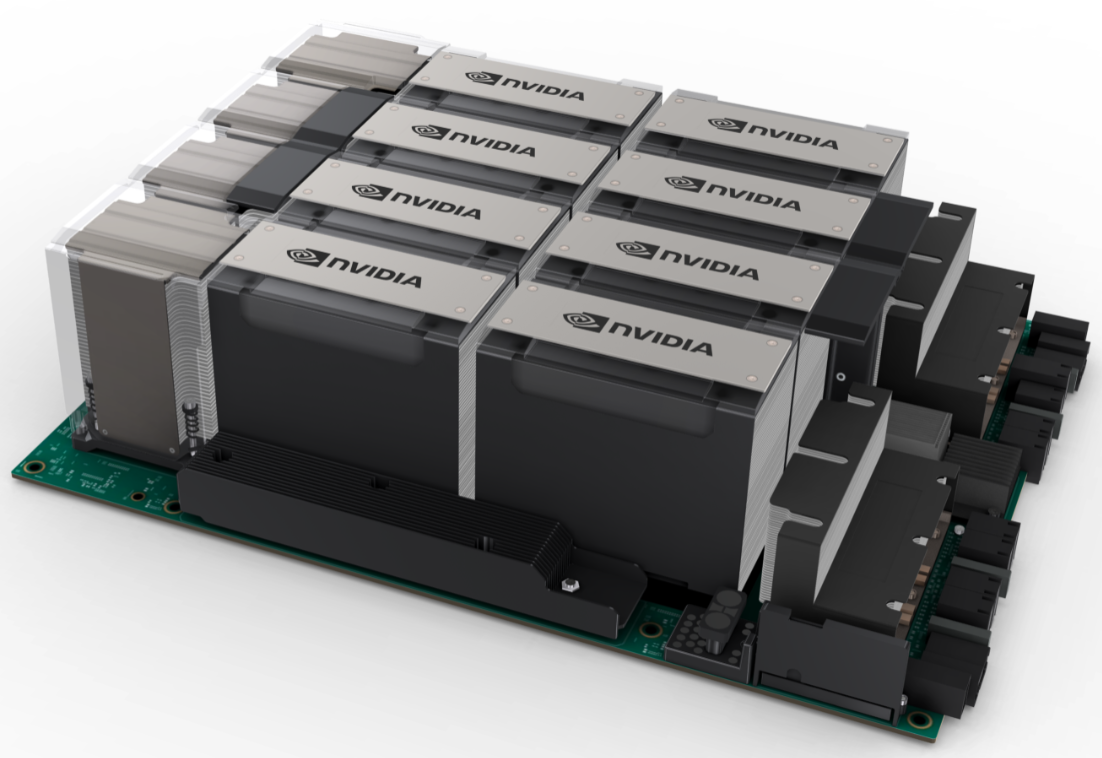
NVIDIA H100 SXM5 8-GPU baseboard inside a Lenovo ThinkSystem SR680a V3 server
Built for the H100

Resilience that maps to your accelerator fleet

On an NVIDIA H100 fleet, KWAM treats every GPU, baseboard, node, and rack as an independent fault domain, then spreads your Python codebase and data across them so no single failure holds the only copy.

Eight GPUs on an SXM5 board become eight places KWAM can lose and still rebuild. Every fragment is SHA-256 gated, healing runs continuously in the background, and the model only advises, it never produces a byte.

Durability

Nines as a design target, not a promise of perfection

If failures exceed the code distance, data is lost, and KWAM tells you. Knowing is not recovering; that residual is the nines.

6 nines
Headline durability design target: engineered, defended, never claimed as zero loss.
SHA‑256
Content gate on every fragment. Corruption is detected, not hidden.
RS / LRC
Deterministic codecs produce the bytes. The model never does.
0 covert
The AI manifest is open and decodable, never a hidden payload.
The math, in motion

The KWAM mathematics

RS(8,4) over GF(28): 8 data + 4 parity, any 8 of 12 rebuild the exact original, six nines as a design target.

The honesty spine

The honesty is the moat

We don't say "zero data loss," "perfect," or "unbreakable." We say what is true and defensible, and we surface the residual rather than hide it. That discipline is the product.

What we claim Durability is six nines as a design target. The defensible guarantee is no silently-corrupted bits (SHA-256 detection). The fleet shown in our HUD is simulated and labeled; the only real bytes are SHA-gated Reed–Solomon fragments.
What the model does The model is advisory. It orchestrates and narrates — it never mints consent and never produces a data byte. Deterministic codecs do.
Adversarial by default Every KWAM node ships a local AI model and an on-node adversarial red team that continuously probes the node's own integrity, numbers, and claims, surfacing problems rather than hiding them. The red team can challenge but never overrule the deterministic codecs; the math still produces every byte.
Mission control

See the fleet, the math, and the bits

The KWAM HUD shows the durability SLA, the reconstruction orchestrator, fleet topology, and live protection metrics, all clearly labeled for what they are.

Explore the architecture

KWAM Mission Control

Durability HUD

Six-nines target · JHMM reconstruction orchestrator · fleet topology · live Python-codebase protection.

simulated:true · source:MODELED · real_bytes:true (RS fragments)

Put a defensible durability SLA behind your code

KWAM is proprietary and licensed directly. Tell us about your fleet and we'll scope a deployment.

Legal

Ownership & governing law

KWAM is our intellectual property, grounded in Swiss law.

Intellectual property & governing law

KWAM is the sole and exclusive property of the owners of KWAM.CH

KWAM — its source code, the KWAM language, the JHMM reconstruction orchestrator, the deterministic codec runtime, and all associated AI components — is a proprietary computer program and the sole and exclusive intellectual property of KWAM.CH. As a computer program it is a protected work under the Swiss Federal Act on Copyright and Related Rights (Copyright Act, CopA), and the exclusive rights of use vest in KWAM as employer; it is further protected as a trade secret under the Swiss Federal Act Against Unfair Competition (UCA). KWAM is offered by private licence only. All rights reserved.

CopA (SR 231.1) Art. 2 para. 3 & Art. 17 · UCA (SR 241) Art. 6 · Governed by the laws of Switzerland · Place of jurisdiction: Zürich